
Banking Review · June 2026
Up Bank Review 2026: The Honest Take After 6+ Years
Australia’s best banking app, an excellent travel card, and a savings system that became more fiddly in 2025. Here’s whether it’s still worth opening after using Up since November 2019.
Up and Ubank: offer and account conditions
Up: ordinary Savers earn 5.35% p.a. Grow when untouched, up to the combined $250,000 individual Grow cap, or 2.00% p.a. Flow when accessed. First make five qualifying debit-card purchases in the calendar month; otherwise ordinary Savers earn 0.00%. The 2Up Grow cap is separate. Essentials earns 2.00% Flow without the purchase requirement until 28 February 2027. Up rates and conditions.
Up travel: no Up international transaction or ATM-withdrawal fee; ATM operators can charge separately. The card uses Mastercard’s exchange rate. Daily withdrawal limits still apply: the standard ATM cash-out limit is $1,000, subject to approved variations. Up currently advises allowing 15–20 business days for a physical card. Up travel information.
Up invitation: The SCONS referral offer is up to $21, subject to the amount shown when you join. Complete signup and identity verification within the invitation’s terms; amounts and availability can change. Read the referral conditions before relying on a bonus.
Ubank Save: 5.10% p.a. ongoing bonus interest; eligible new customers can earn 5.85% p.a. for up to four months. Hold a Spend account and grow combined eligible Save balances by $1 per month, excluding interest, by 11:30pm Sydney time on the last day. Withdrawals can make you miss this test. Bonus interest is paid on up to $1 million per customer; offset-linked balances are excluded. Ubank savings conditions.
Deposit protection: eligible Up deposits share Bendigo and Adelaide Bank’s $250,000-per-person FCS limit; Ubank deposits share NAB’s limit. These are limits per person per institution, not per account. Rates are variable. Account eligibility and identity checks apply.
My verdict: still the best everyday Australian bank account
After using Up since November 2019 across 37+ countries, it’s the account I keep recommending to friends — but for slightly different reasons than I would have a year ago. The app is still the best in Australian banking, the card is still excellent overseas, and the everyday experience still beats anything the Big Four offer.
The catch: the Grow & Flow savings system that launched in September 2025 is more fiddly than a plain high-interest account. If your only goal is maximising savings interest with zero management, Ubank is easier. If you want one excellent everyday account that handles spending, travel, budgeting and savings in one app, Up is still hard to beat.
| Sign-up bonus | $21 (via referral) |
| Savings rate | 5.35% Grow / 2.00% Flow |
| International fees | 0% |
| Best for | Everyday banking & travel |
Up Bank works best for Australians who want one account that feels modern, easy to manage, and genuinely useful day to day. The app is still one of the best in the country, the card is excellent for overseas spending, and the setup stays simple enough that most people will actually stick with it.
This review is for people deciding whether Up is worth opening in 2026, whether the up to $21 sign-up bonus is real, and whether the savings setup is still competitive after the move to Grow & Flow.
If you’re comparing options, read this alongside my best free bank accounts guide, the Ubank vs Up Bank comparison, and my travel card comparison.
Disclosure: this review includes an Up referral link. The SCONS invitation displayed up to $21 when checked on 14 September 2026. Rewards depend on the invitation terms. A reward is not guaranteed by visiting this page.
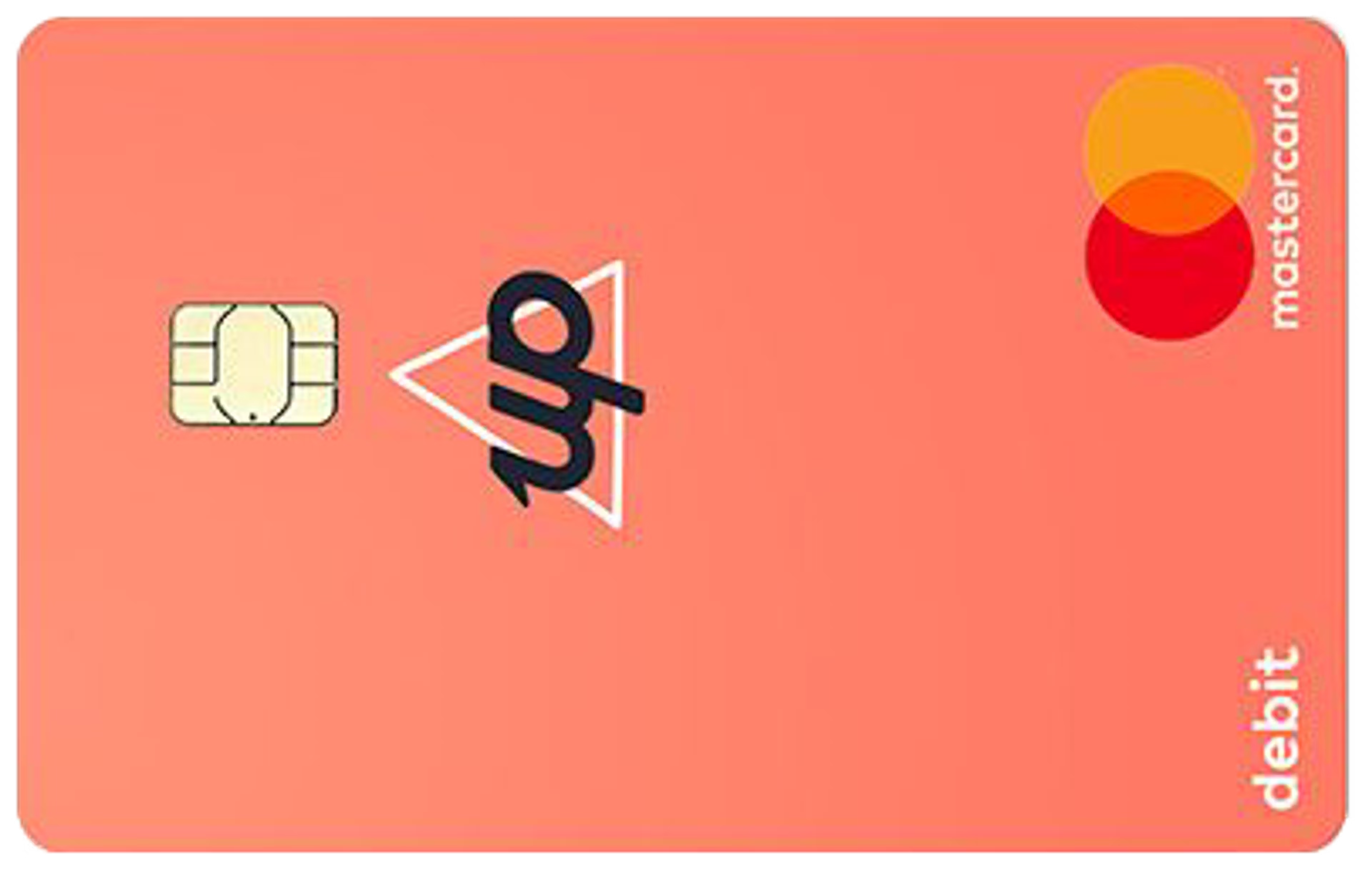
How to get the $21 sign-up bonus
The SCONS invitation currently displays up to $21. Check the amount and eligibility before completing signup. The following steps explain how an eligible invitation works:
-
1
Open Up via the referral link — this attaches the conditional up to $21 offer to your signup before you start the application -
2
Verify your ID in the app using your driver’s licence or passport — usually instant - 3 Check the bonus status in the Up app after successful onboarding. Do not rely on a fixed payment date; the invitation terms and eligibility apply.
Start here
Already know Up’s the right fit? Use the live invite to lock in the conditional up to $21.
This is the cleanest point in the process to get it right. Open the account through the referral first, then finish the signup in the app.
Why Up is still one of the easiest Australian bank accounts to recommend
The app is still the benchmark
One of the few banking apps in Australia that feels properly designed. Real-time spending notifications, easy card controls, simple Savers, and shared-money features that actually work.
Best simple travel card for most Australians
0% international transaction fees, no Up-side ATM fees overseas, and a card setup that stays simple. Easier to recommend than juggling Wise + Revolut + a backup card.
Works as a real everyday account
No monthly fee, no legacy banking baggage, and a setup that genuinely beats the Big Four for daily spending, subscriptions and bills. It’s not just a holiday card — it’s a primary account.
Using Up overseas
This is where Up genuinely earns its place. I’ve used the card across Southeast Asia, Europe and the UK without paying Up a cent in fees. The notification system is the killer feature — you get a push notification with both the local currency amount and the AUD equivalent before you’ve finished tapping.
What’s free
- 0% international transaction fees
- $0 from Up’s side on overseas ATM withdrawals
- Instant card freeze/unfreeze if you lose it
- Real-time FX notifications showing both currencies
What you might still pay
- Foreign ATM operator fees — the local ATM owner can charge their own fee. Up doesn’t reimburse these (check any alternative bank’s current rebate terms).
- Mastercard exchange spread — competitive but not the absolute cheapest. Wise and Revolut beat it on conversion for big amounts.
What this saves you in practice
Example: $3,000 spent overseas on a 2-week trip
ATM operators can still charge their own fee — this is what Up saves you, not a guarantee every overseas ATM is free.
For most Australians, the simplest setup is Up as your primary travel card, with Wise as a backup if you’re converting larger amounts.
Travelling soon? Up is the cleanest default
Wise and Revolut have their place for transfers and heavy multi-currency, but for spending overseas without fee surprises, Up is the simplest answer.
The main catch: Grow & Flow savings
Up introduced its Grow & Flow savings system in September 2025. Ordinary Savers now require five qualifying debit-card purchases in the month before Grow or Flow interest is earned.
Here’s how it actually works:
Grow rate: up to 5.35% p.a.
On any Saver you don’t withdraw or transfer from during the calendar month. Capped at $250k combined.
Flow rate: 2.00% p.a.
On any Saver you do withdraw from — for the entire month, even if you only withdraw once.
Ordinary Savers require five qualifying debit-card purchases per calendar month. If you miss this, they earn the 0.00% base rate. Essentials Savers are different: until 28 February 2027, they earn Flow without that purchase requirement.
The workaround: split your money across Savers
Up lets you create up to 50 Savers. The strategy is to keep most of your money in Savers you don’t touch (earning 5.35% Grow), with one or two separate “spending” Savers for money you might need (earning 2.00% Flow). Withdrawing from your spending Saver only drops that Saver to Flow — the rest keep earning the full rate.
Ubank is an alternative if you can grow combined eligible Save balances by at least $1 every month, excluding interest. It offers 5.85% p.a. for eligible new customers for up to four months and 5.10% p.a. ongoing. Withdrawals can make you miss its growth condition. Up’s ongoing Grow rate is 5.35% p.a. on eligible untouched savings after qualification.
Honest pros & cons
What I love
- Best banking app in Australia — not close
- 0% international transaction fees
- $0 Up-side ATM fees overseas
- Up to 50 Savers, fully customisable
- Round-Ups, Pay Splitting, Locked Savers
- 2Up joint accounts (great for couples)
- $0 monthly fee, $0 dishonour fees
- Real-time FX notifications
Where Up falls short
- Grow & Flow is fiddlier than the old system
- Beaten by Ubank on savings rate & simplicity
- Doesn’t reimburse foreign ATM operator fees (check any alternative bank’s current rebate terms)
- Wise/Revolut beat it on FX conversion for big amounts
- No Samsung Pay, Fitbit Pay or Garmin Pay
- No physical branches if you ever need them
Who Up is best for
✓ Great for
- Australians who want a genuinely good everyday account
- Travellers wanting one clean fee-free card
- Couples who want proper joint accounts (2Up is excellent)
- People who value app quality and budgeting tools over rate-chasing
- Anyone building savings habits — Round-Ups and Locked Savers genuinely help
⚠ Probably not for
- People whose only priority is the highest savings rate
- Anyone who wants branch banking
- People who frequently dip into savings (you’ll lose the Grow rate)
- Heavy international spenders who’d benefit more from Wise/Revolut on FX
How to get started with Up
-
1
Open the account through the referral link so the $21 attaches -
2
Verify ID with your driver’s licence or passport in the app -
3
Add the digital card to Apple Pay or Google Pay and start using it immediately -
4
Set up separate Savers early so Grow & Flow is easier to manage
Frequently asked questions
Final verdict
Still worth opening in 2026
Up’s app remains the best in Australian banking, the travel use case is still strong, and it’s an easy product to live with as a primary account.
The only reason not to choose it is if you’re optimising purely for savings interest — in that case, look at Ubank first. For everyday banking and travel, Up is still the one I recommend.
Related MoneyHackHQ guides
Keep going with the most relevant next reads from the same cluster:
Rates and conditions verified against up.com.au.
Important information:
- Up’s Grow rate (up to 5.35% p.a.) applies to Savers not withdrawn from during the calendar month, on combined balances up to $250,000. Flow rate (2.00% p.a.) applies to any Saver withdrawn from. Both require 5 settled card purchases per month to activate. Rates are variable and subject to change.
- The invitation displayed up to $21 on 14 September 2026. Join and pass identity checks within 14 days of receiving an eligible invitation, and satisfy all offer criteria. Read the current invitation terms.
- Foreign ATM operator fees may apply (charged by the ATM owner, not Up).
- Up is a banking service provided by Bendigo and Adelaide Bank Limited ABN 11 068 049 178 AFSL 237879.
- Deposits up to $250,000 per account holder are protected by the Australian Government’s Financial Claims Scheme.
- This content is general information only and should not be considered personal financial advice.
- MoneyHackHQ may earn a referral bonus when you sign up using the link above.
Leave a Reply